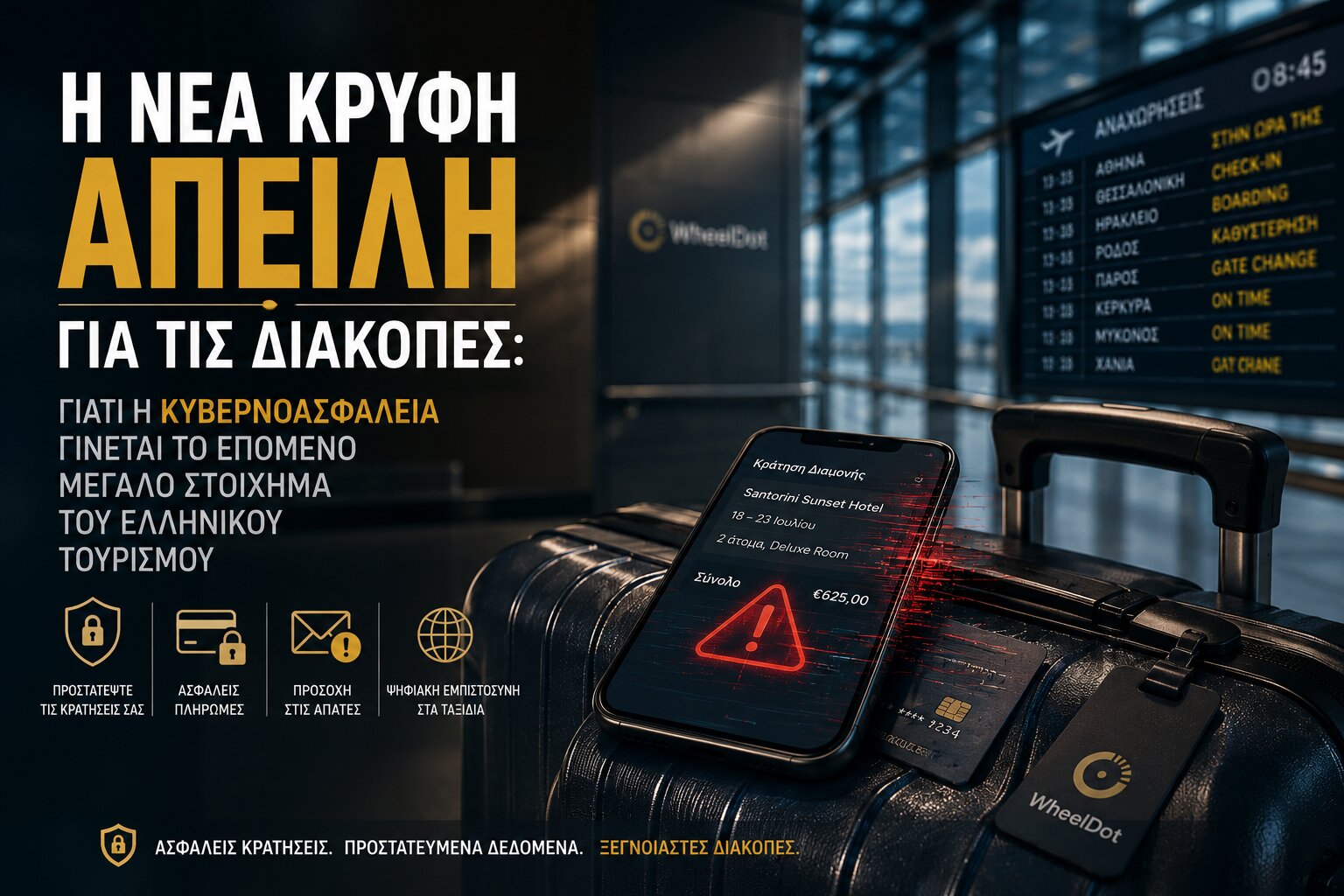
A hotel reservation, an online payment, a message about your rental car pickup, or a link asking you to verify your credit card details all seem like perfectly ordinary parts of planning a trip.
For millions of travelers, holidays now begin long before they arrive at their destination. They begin on a screen: searching for flights, booking accommodation, reserving transportation, making payments, completing online check-in, and communicating with tourism businesses.
This digital convenience has transformed the travel experience. At the same time, however, it has created an entirely new category of risk.
The next major challenge for Greek tourism may not be limited to infrastructure, pricing, accommodation quality, or customer service. It increasingly involves something less visible but equally important: whether travelers can truly trust the digital services they use.
On July 13, 2026, Greece's National Cybersecurity Authority announced a dedicated online event focused on cybersecurity in tourism, highlighting the growing need to strengthen the digital resilience of tourism businesses operating in an increasingly connected environment.
The timing is far from accidental.
As Greek tourism continues to digitalize, more reservations, payments, customer records, and operational processes move online every year. Cybersecurity is no longer simply an IT issue—it has become a matter of trust, reputation, and overall travel quality.
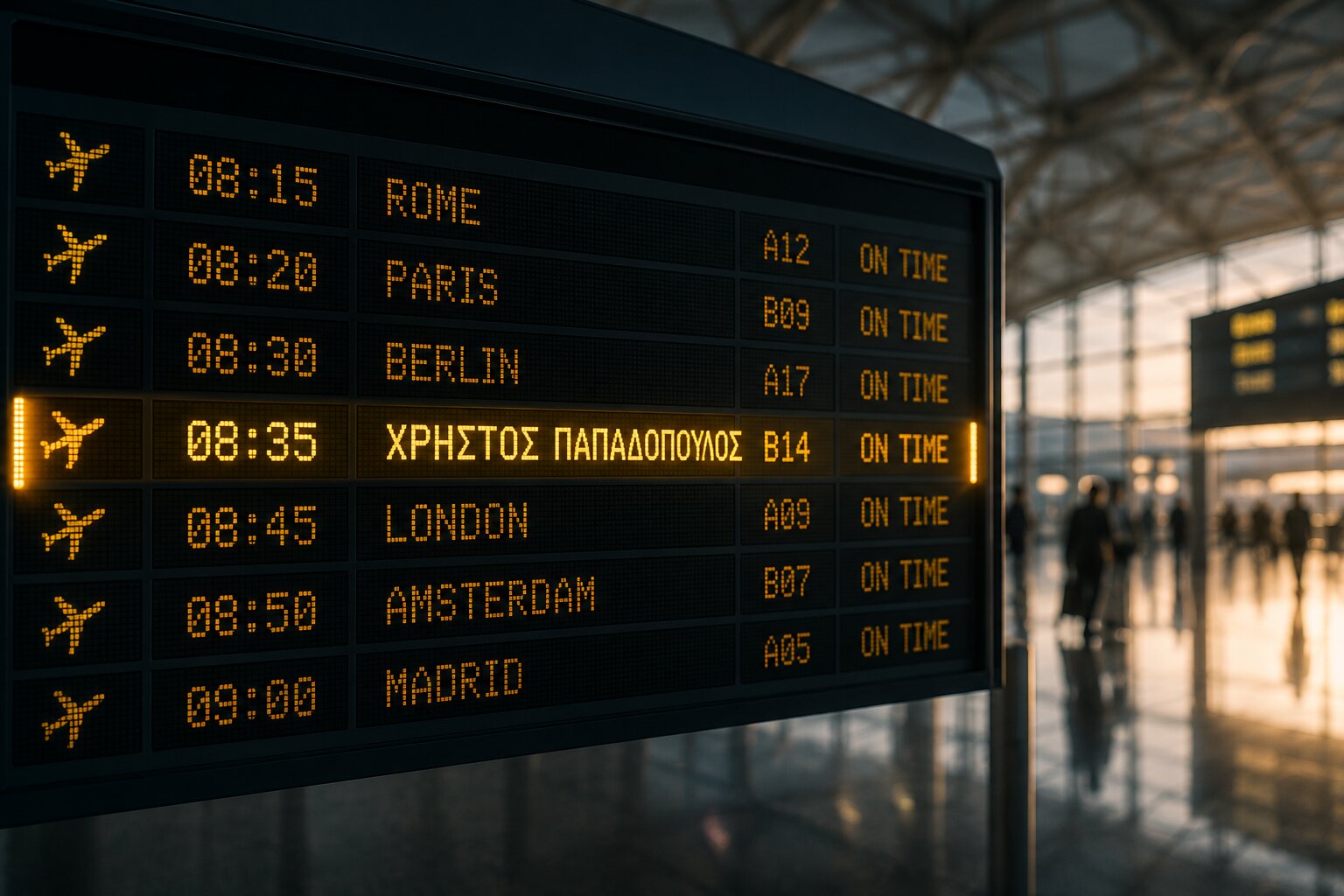
When a Message Already Knows Your Reservation
Modern travel scams are no longer easy to recognize.
The most dangerous attacks are often the ones that appear completely legitimate.
A traveler may receive a message that seems to come directly from their hotel or booking platform. It may include the correct hotel name, travel dates, or even the guest's name before requesting payment verification or asking them to confirm their credit card information.
The message usually creates urgency:
"Your reservation will be cancelled."
"Payment verification is required."
"Immediate action is necessary."
In many cases, attackers do not compromise the booking platform itself. Instead, they gain access to a hotel's account—often through phishing or stolen credentials—and communicate with guests through legitimate channels.
This makes fraudulent messages much more convincing.
The traveler is not receiving an obviously fake email.
They are receiving what appears to be a perfectly normal communication regarding their upcoming trip.
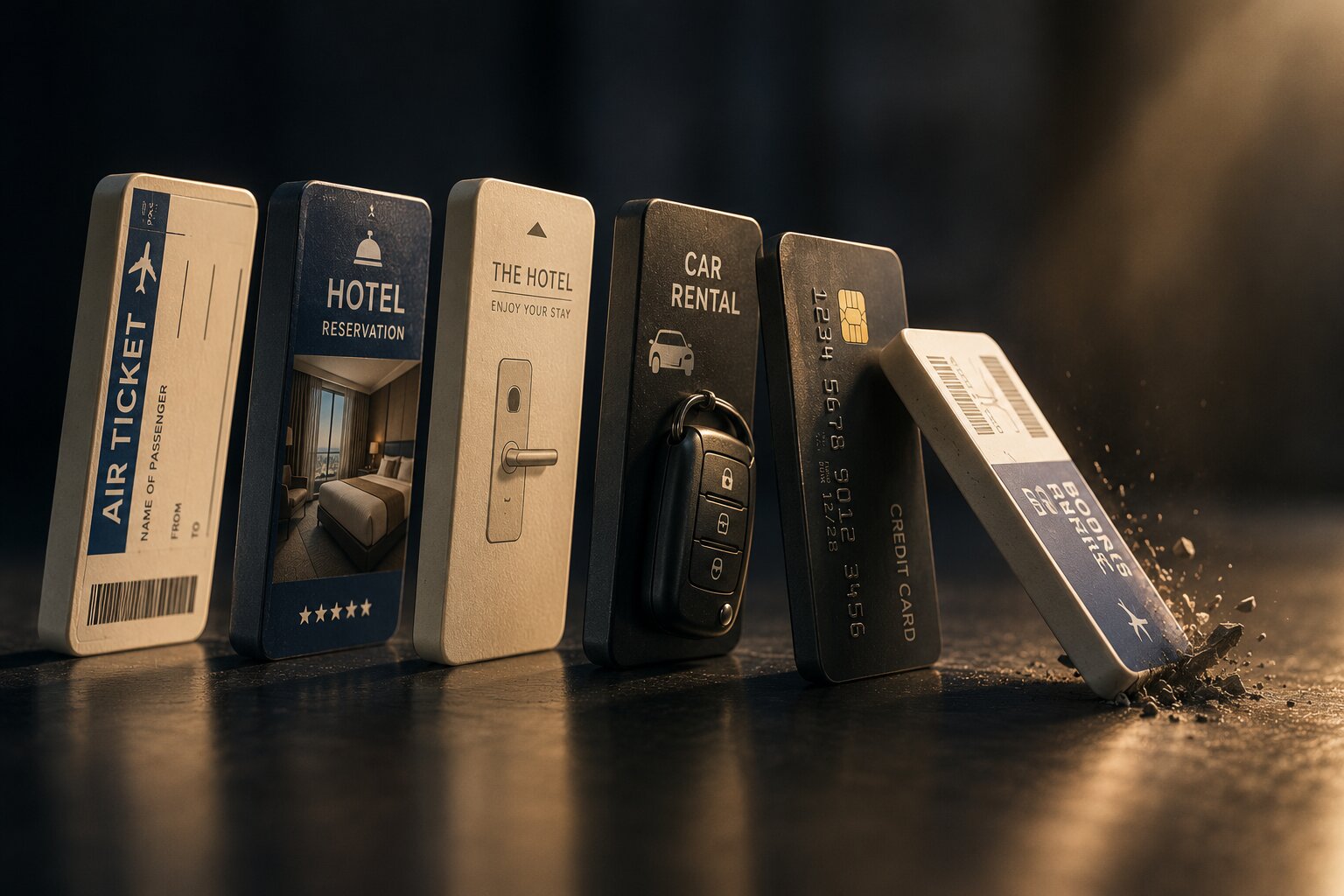
Tourism Has Become an Attractive Target
Tourism combines almost everything cybercriminals look for:
- high transaction volumes,
- valuable financial information,
- personal identity data,
- passports,
- payment cards,
- travel schedules,
- and continuous communication between businesses and customers.
A single holiday may involve airlines, hotels, booking platforms, payment providers, car rental companies, local suppliers, and several independent software systems.
Every additional digital connection improves convenience—but also creates another potential entry point for cyberattacks.
For countries like Greece, where tourism relies heavily on thousands of small and medium-sized businesses, this presents a significant challenge.
Most businesses deliver exceptional hospitality.
However, many do not have dedicated cybersecurity teams or enterprise-level security resources.
This does not necessarily reflect a lack of responsibility.
It reflects the reality of busy daily operations.
A receptionist managing arrivals, cancellations, customer emails, and reservations may easily trust an email that appears to come from a well-known platform.

Artificial Intelligence Is Making Scams More Convincing
Not long ago, suspicious emails were easy to identify because of poor grammar or obvious spelling mistakes.
That is changing rapidly.
Artificial intelligence now allows attackers to generate professional-looking messages in multiple languages, adapting tone and style to match legitimate businesses.
A phishing email sent to a Greek hotel manager can now be written in flawless Greek.
A fraudulent message targeting a German or French traveler can sound equally natural.
Artificial intelligence did not invent phishing.
It simply made high-quality phishing campaigns easier, faster, and significantly cheaper to produce.
As a result, one of the oldest pieces of cybersecurity advice—"watch for spelling mistakes"—is no longer enough.
A well-written message is not automatically a trustworthy one.

The Biggest Cost Is Not Always Financial
Financial losses are often the most visible consequence of cybercrime.
However, for tourism businesses, reputation can be even more valuable.
If a traveler loses money after receiving messages that appear to come from a hotel or tourism company, many customers will associate the incident with that business—even if the company itself was also a victim.
Trust can disappear within minutes.
Negative reviews, refund requests, booking cancellations, and damaged reputation may follow.
Cybersecurity has therefore become part of the hospitality experience itself.
Beautiful hotels, modern rental fleets, or outstanding customer service cannot fully compensate if travelers no longer feel safe making online payments or sharing personal information.
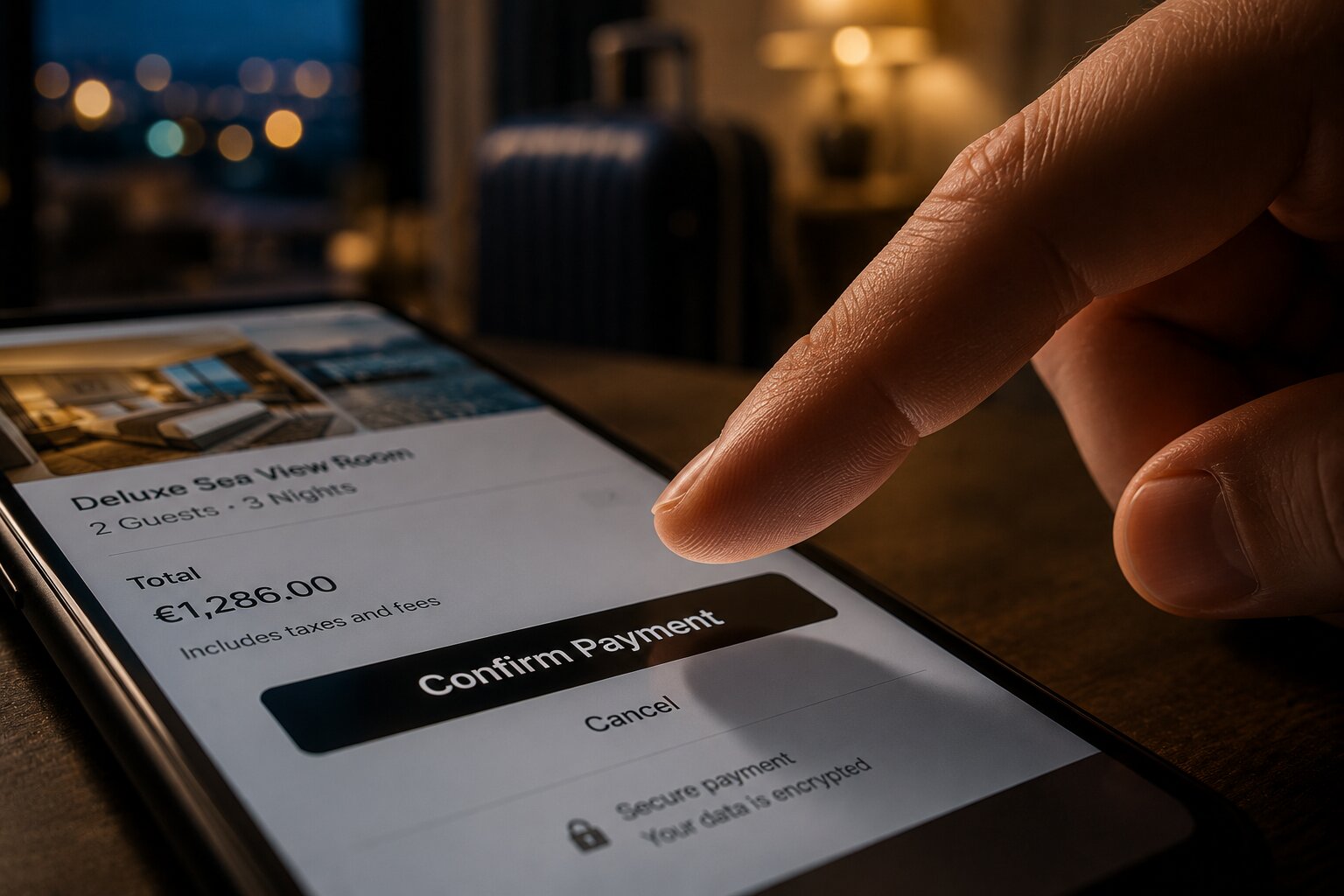
What Travelers Should Do
The solution is not to fear online bookings.
Digital services have made travel faster, easier, and more accessible.
The solution is verification.
- Never make payments simply because a message creates urgency.
- Open the official app or website instead of clicking links in unexpected messages.
- Contact the hotel or travel company using contact details from their official website.
- Carefully verify website addresses before entering payment information.
- Enable banking transaction notifications.
- Never send complete payment card details through email or messaging platforms.
Small precautions can prevent major problems.

What Tourism Businesses Should Improve
No organization can completely eliminate cyber risks.
However, businesses can dramatically reduce both the likelihood and the impact of successful attacks.
Key priorities include:
- Multi-factor authentication for all important accounts.
- Individual user accounts instead of shared credentials.
- Continuous employee awareness training.
- Clear communication explaining how the business contacts customers.
- A predefined incident response plan before an attack ever happens.
Cybersecurity is not just about technology.
It is about preparation.

Cybersecurity Is Becoming Part of Greek Hospitality
For decades, Greek tourism has invested in hospitality, authenticity, and visitor experience.
Today, hospitality begins long before the guest reaches the reception desk.
It begins with the first online interaction.
It begins with a secure website.
A trustworthy payment process.
A recognizable communication channel.
A customer who knows exactly where to turn if something seems suspicious.
Cybersecurity should not be viewed as a purely technical burden.
For many businesses, meaningful improvements start with simple measures: stronger passwords, multi-factor authentication, software updates, controlled user access, and employee education.
Greece does not simply need more digital tourism services.
It needs digital tourism services that travelers can confidently trust.
In an increasingly competitive tourism market, digital trust may become one of Greece's strongest competitive advantages.
Conclusion
Most travelers do not want to think about cybersecurity while planning their holidays.
They simply want confidence that their reservation is genuine, their payment is secure, and the business they are communicating with is authentic.
That confidence has become the new face of hospitality.
Greek tourism has already proven that it can create unforgettable travel experiences.
Its next major opportunity is ensuring that the digital journey leading to those experiences is just as safe, reliable, and welcoming.
Ready to rent your next car in Greece?
Browse available vehicles on WheelDot, compare options, and book online with flexible pickup choices.
Explore more on WheelDot
Popular destinations for car rental
Planning your next trip? Explore some of the most searched destinations on WheelDot and find the right vehicle for your travel needs.